DIGNITY
Each year…
we prayerfully choose a guiding word that responds to what families most need to remember and reclaim.
This year, that word is Dignity.
We live in a culture that constantly asks us to prove our worth — through achievement, comparison, productivity, appearance, or control. Children feel this pressure early. Parents feel it constantly. Over time, many families begin to live from striving rather than security, from reaction rather than rootedness.
Dignity calls us back to a deeper truth: our worth is not earned — it is received.
Dignity Begins with Identity
Dignity is rooted in identity. Before we act, perform, lead, fight, create, or love, we are first named as people made in the image of God.
When identity is unclear, behavior becomes frantic.
When identity is secure, behavior can be formed with intention.
This is why identity is always the starting place in our Rooted Summits and in the Rooted Families journey. Children and parents alike need language for who they are before they are asked to decide what to do. Dignity reminds us that who we are comes first — and everything else flows from there.
Dignity Requires Dependence
True dignity does not come from self-sufficiency.
It grows through dependence — on God, on truth, and on rhythms that keep us grounded.
Dependence teaches us that we do not have to hold everything together on our own. It invites humility, trust, and steadiness. When families learn to depend rightly, dignity stops being fragile. It becomes something we can return to, even when we fail, struggle, or fall short.
This is why dependence and identity are inseparable foundations in our formation work. Dignity is not maintained by control, but by remaining rooted in what is steady and true.
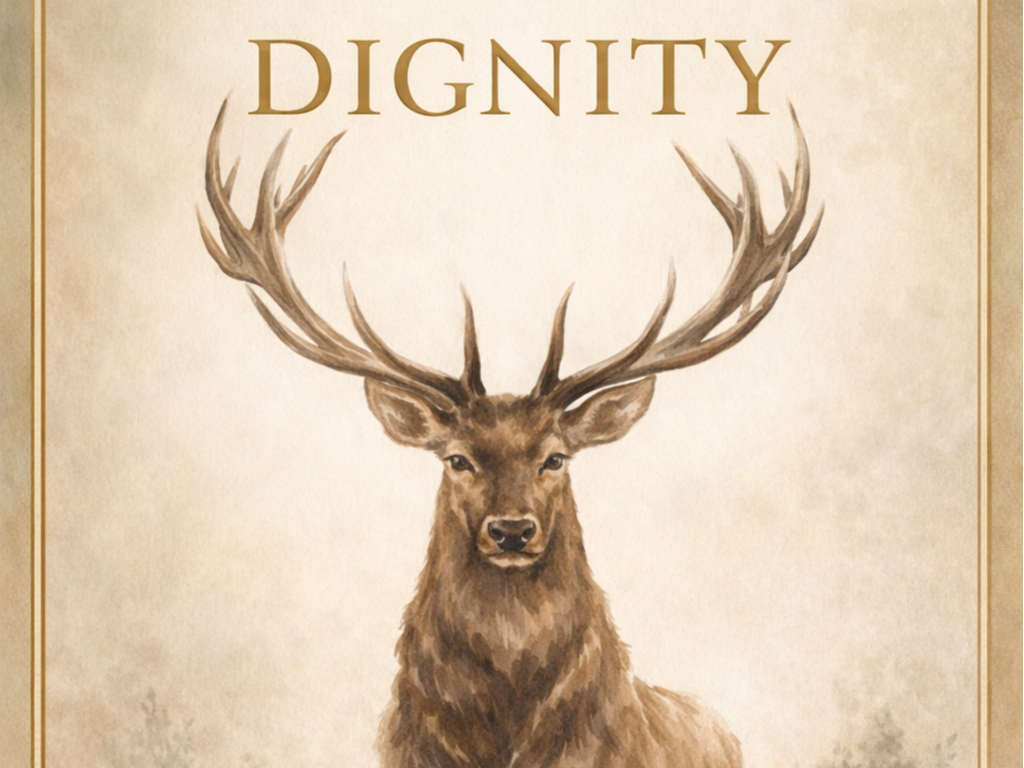
The Stag — A Picture of Dignity
Throughout Scripture and history, animals have often been used to help us understand unseen qualities made visible. For this year, the stag serves as a living picture of dignity.
The stag is not hurried, loud, or aggressive. It carries strength with restraint. It stands alert and watchful, aware of its surroundings, yet unthreatened by them. Its power is real, but it is not constantly displayed. The stag does not need to prove itself.
This is the posture of dignity.
Strength Without Striving
The stag embodies strength that is ordered and calm. It moves with intention, not impulse. When it stands its ground, it does so with presence rather than force. This mirrors the kind of dignity we hope to cultivate in families — a steadiness that does not depend on dominance, defensiveness, or control.
The stag is attentive without being anxious. It listens before it reacts. It knows when to move and when to wait. This kind of watchfulness reflects a family posture shaped by wisdom rather than fear — alert to what matters, but not ruled by urgency.
In a culture that often rewards constant reaction, the stag reminds us that dignity allows space for discernment.
“Dignity is not loud.
It does not rush to assert itself.
It is secure enough to remain still.”